The competition pathway for school AI students in India
INAIO, Technovation Girls, Imagine Cup Junior, the ATL Marathon. What each one rewards, which students to enter, and what judges are actually looking for.
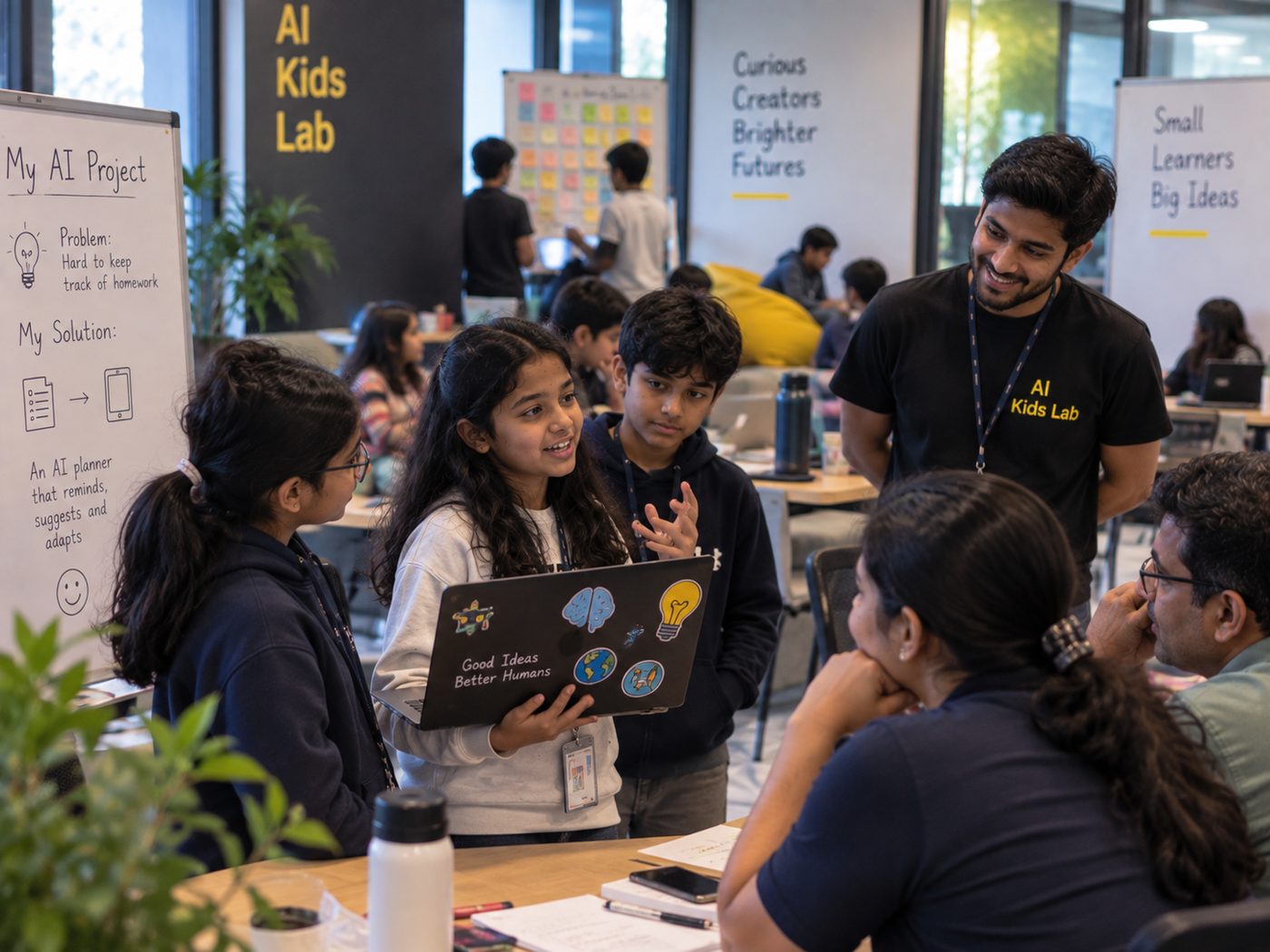
A school AI program that ends at the school gate is a good program. One that gives students somewhere external to take their work is a better one, for three reasons that have nothing to do with trophies.
A competition supplies a deadline that is not set by a teacher, an external standard that cannot be argued down, and a line on a record that matters later. The students who benefit most are rarely the ones who win.
The main routes
Details, eligibility and timelines change every year, so treat what follows as a map rather than a timetable, and confirm the current cycle on each organiser's official site before you commit students to it.
Indian National AI Olympiad (INAIO)
Run by ACM India, this is the national pathway toward the International Olympiad in Artificial Intelligence. It is the most academically demanding route on this list — closer to a mathematics olympiad in spirit than to a hackathon, with a scientific and a practical component. Best suited to students who enjoy the theory and are comfortable being tested individually. Preparing for it also raises the ceiling for everyone else in the class, because the foundations it demands are the ones a good curriculum teaches anyway.
Technovation Girls
A global program in which teams of girls build a technology solution to a community problem, typically with a working app and a business case. It rewards exactly what a well-run Grade 8 or Grade 9 capstone already produces: a real problem, a real user, and something that runs. If your school runs a community-problem capstone, your entry is most of the way written before the season opens.
Imagine Cup Junior
Microsoft's AI-for-Good challenge for school-age students. It is deliberately accessible, with strong supporting material for teachers, and is often the best first competition for a school that has never entered one. Teams identify a social problem and propose an AI solution, which means a strong idea with an honest prototype can do very well.
ATL Marathon
Run under the Atal Innovation Mission, for schools with an Atal Tinkering Lab. Broader than AI — it is an innovation challenge — but AI projects fit squarely within it, and the infrastructure is already in your building if you have an ATL. Worth checking whether your school qualifies, because many do and never enter.
MIT App Inventor showcases and hackathons
Lower stakes, frequent, and global. Useful for the mobile interfaces students build once they can wrap an engine in something usable, and a good way for younger students to experience submitting work externally without a year-long commitment.
What judges actually reward
Having sat on panels for student AI projects, the pattern is consistent and slightly counter-intuitive:
- A real, specific problem beats an important, vague one. "Helping my grandmother read her medicine labels" scores better than "revolutionising healthcare."
- Working beats ambitious. A modest thing that runs in the room beats a magnificent thing that is still a mockup.
- Honesty about limits scores points, not deductions. A team that says "it fails on handwriting it hasn't seen, here is the accuracy" reads as credible. A team claiming 99% accuracy gets probed until it collapses.
- The student must have built it. Judges ask second and third questions specifically to find out. Over-polished adult involvement is obvious and is penalised.
What do serious AI competition judges reward most?
Which students to enter
Resist the instinct to send only the strongest. Enter three kinds of team: the obvious one, the one with an unusually good problem and a rough build, and one team that has never been picked for anything. The third category is where competitions do their real work — external recognition lands differently on a student who has never had any.
Map competition windows against your academic calendar at the start of the year, not when the announcement arrives. Most school entries fail not on quality but on a deadline that landed in an examination fortnight. Pick two competitions to do properly rather than five to do badly.
Where this leads
For a handful of students each year, a competition is not the end of the line. A Grade 9 student who finishes with a working product, real users and a pitch that has survived a hostile panel is in genuinely unusual territory for their age. That is the point at which a student incubator becomes a realistic next step rather than a flattering idea — and the school that started them gets to say so.
AI Kids Lab turns the CBSE AI curriculum for Grades 7, 8 and 9 into gamified lessons designed by product engineers, inside your school's existing timetable. Try a free lesson (no sign-up), or book a 30-minute call.
Talk to us on WhatsApp