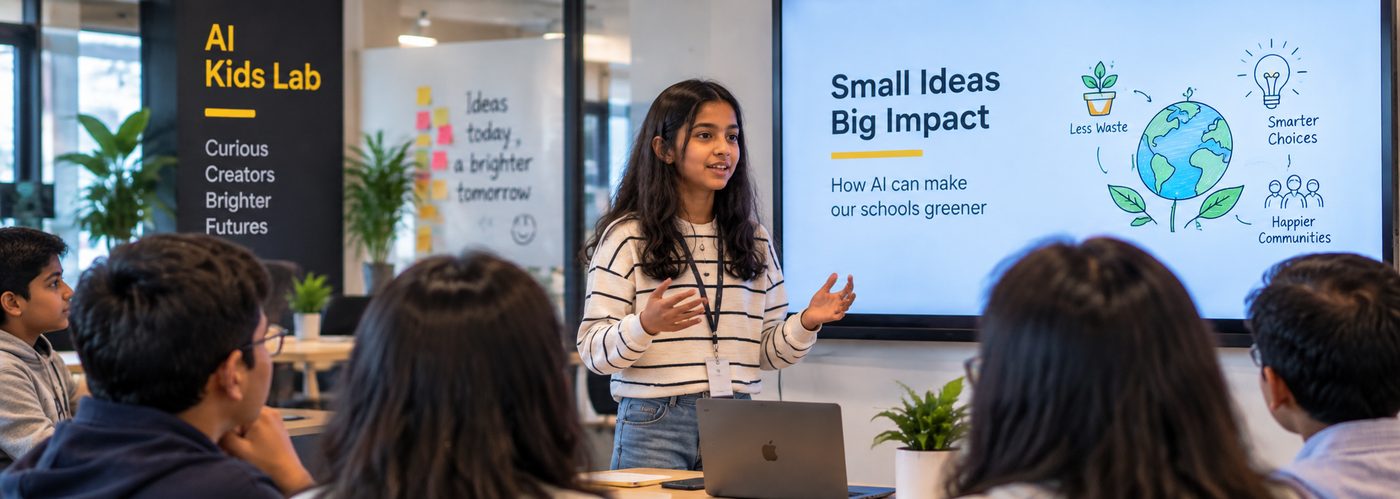
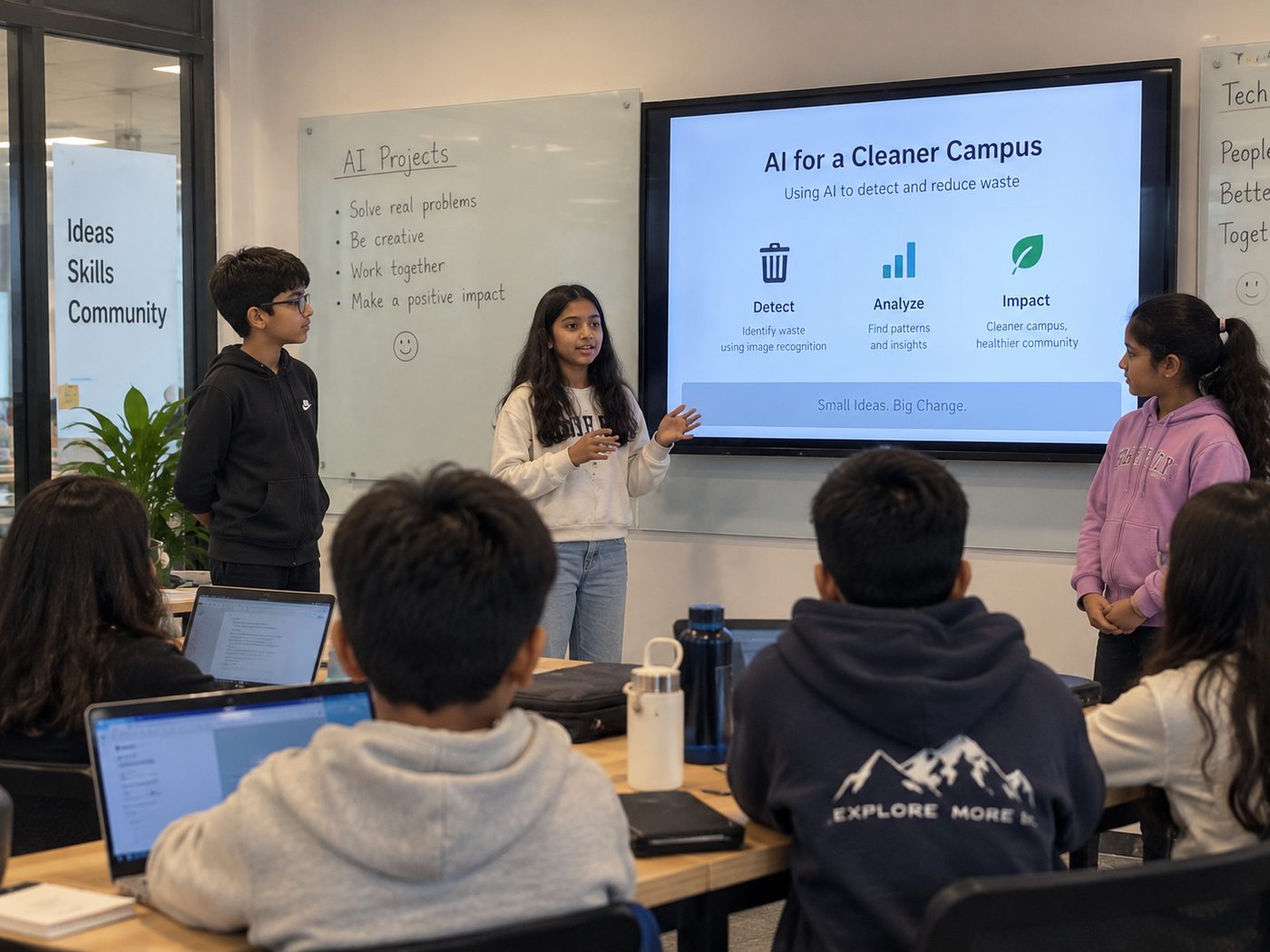
Twelve real-world AI examples that make Indian students curious
"AI is a branch of computer science that…" has never made a thirteen-year-old lean forward. A toll-plaza camera has. Here are twelve examples from ordinary Indian life, the question that opens each one, and the twist that makes students think.
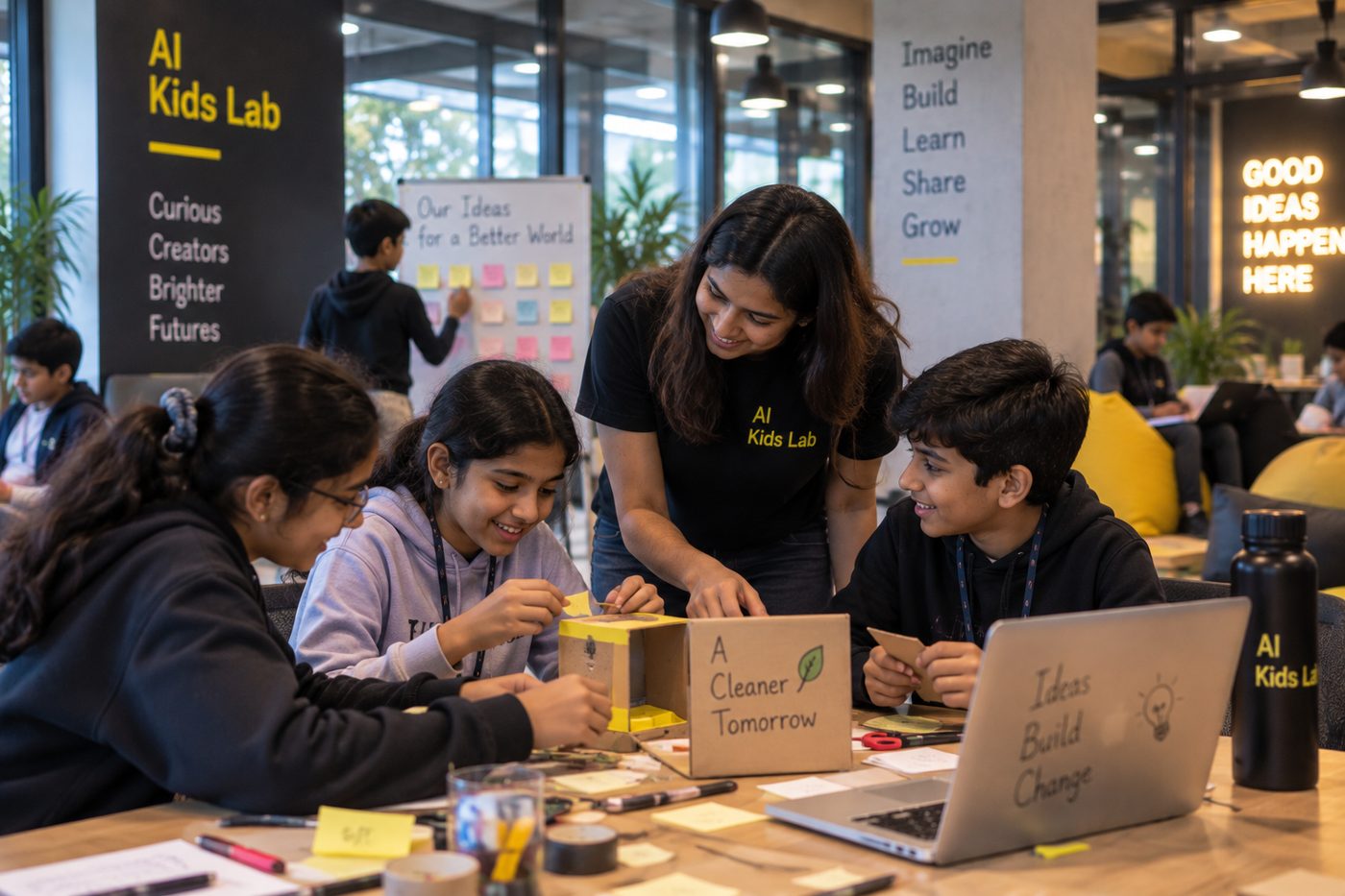
Curiosity needs a gap: something a student has seen, and doesn't quite understand. Start a lesson there, ask them to predict what's going on before you explain anything, and the explanation lands on a mind that wants it.
The examples below follow the three domains of AI in the CBSE Class 9 "AI Reflection" unit: Data, Computer Vision and Natural Language Processing. Each has three parts: a question to open with, what's actually happening, and a twist. The twist is where AI gets something wrong, and it's where the real understanding happens.
Data: AI that finds patterns and predicts
1. Google Maps travel times
Ask: why does the same trip to school show 18 minutes at 7 am and 40 minutes at 6 pm? What's happening: the estimate is a prediction, built from patterns in traffic data and past journeys at that time of day. The twist: a sudden road closure or a crowd leaving a cricket match. The prediction is wrong until new data arrives. Ask it three times on different days and you get different answers — which a calculator never does.
2. UPI fraud alerts
Ask: how could a payment app know that a payment looks unusual for you? What's happening: fraud systems learn what normal activity looks like and flag what doesn't fit. The twist: your genuine payment to a new shop gets blocked. That's a false alarm, and it opens the best question in AI: who should check the AI's decision?
3. Food-delivery arrival times
Ask: if you had to predict when a pizza will arrive, what would you want to know? Students will list distance, traffic, time of day, how busy the restaurant is — and they've just designed a dataset. The twist: the first heavy rain of the monsoon.
4. Video recommendations
Ask: why does your YouTube home page look nothing like your friend's? What's happening: the system predicts what you're likely to watch from what you, and people like you, watched before. The twist: watch three videos about one thing and your feed fills with it. Is that the AI helping you, or narrowing what you see?
Ask a calculator 25 × 4 three times and you get 100 three times. Ask Maps for the time to school on three days and you get three answers. What does that tell you?
Computer Vision: AI that works with images
5. Number-plate cameras and FASTag
Ask: at a toll plaza, which of these is AI — the FASTag reader or the camera reading number plates? What's happening: FASTag uses a radio tag: tag read, toll paid, barrier opens. A fixed rule. A plate-reading camera has to find the plate in an image and read the characters, which is Computer Vision. The twist: a muddy plate, a fancy font, a bent number. This one example fixes the most common misunderstanding in the whole topic: automatic is not the same as AI.
6. Face unlock, Aadhaar face authentication and DigiYatra
Ask: when a phone recognises your face, what is it actually comparing? What's happening: the image becomes numbers, and the system measures how closely they match what it stored. The twist: dim light, a new pair of glasses, or a system tested mostly on faces that don't look like yours.
7. Counting tigers
Ask: how do you count an animal that hides from people? What's happening: India's tiger estimates use camera traps in the forest, and because every tiger's stripe pattern is unique, individual tigers can be identified from the photographs, with software helping to match them. The twist: a blurry night-time photo of half a tiger.
8. Crop-disease apps
Ask: could a phone photo of a leaf tell a farmer what's wrong with it? What's happening: a model trained on many labelled photos of healthy and diseased leaves predicts which one this looks most like. The twist: a crop it was never shown, or a photo taken in harsh midday sun.
Your friend says a vision AI “sees” a leaf the way we do. What does it actually work with?
Natural Language Processing: AI that works with words
9. "Hey Google, aaj barish hogi?"
Ask: what has to happen between you asking and the answer coming back? Let students put the steps in order: speech becomes text, the text is broken into pieces, the assistant works out what you want (weather, today, your city), fetches the data, and speaks the answer. The twist: Hinglish, a strong accent, or a noisy room.
10. Your keyboard's next-word suggestions
Ask: how does your phone guess the next word you'll type? What's happening: it predicts likely next words from patterns in a huge amount of text, and from how you type. The twist: its funniest wrong guesses. It is predicting, not understanding.
11. Translating Indian languages
Ask: why might a machine find some Indian languages harder to translate than others? What's happening: translation models learn from large amounts of text, and there is far less digital text available in many Indian languages. That's one reason government projects like Bhashini work on building language data and tools for Indian languages. The twist: idioms. Ask for a word-by-word translation of a local saying.
12. Spam filters, chatbots and mood readers
Ask: how does an email filter know "Congratulations! You've won ₹10 lakh" is spam? Then try IRCTC's AskDisha chatbot with a question about booking tickets. The twist: sarcasm. A mood-reading AI that counts happy and sad words will happily label "Wow, great, another test on Monday" as positive.
“Wow, great, another test on Monday.” A mood-reading AI labels this sentence happy. Why?
Mash-ups: real systems combine domains
Finish with systems that need more than one domain. Google Lens translating a menu through your camera uses Computer Vision to read the text and NLP to translate it. A voice assistant uses NLP and data. A self-driving car uses all three. Asking "which domains?" here is a much harder, and much better, question than asking students to label single apps.
One example per period is plenty. Open with the question and let students predict before you explain. Reveal the twist. Then always ask the last question: who should check this AI, and what happens if nobody does? Several of these examples are built into our free AI Reflection lesson, which needs no sign-up.
AI Kids Lab turns the CBSE AI curriculum for Grades 7, 8 and 9 into gamified lessons designed by product engineers, inside your school's existing timetable. Try a free lesson (no sign-up), or book a 30-minute call.
Talk to us on WhatsApp